You know that feeling when you’ve spent the morning cleaning, only to walk back into the living room and notice that something still smells funny? The floors are vacuumed, the kitchen counters are wiped down, and the bathroom looks spotless. Yet trying to remove persistent household odors can feel frustrating when a lingering smell just won’t go away.
If you have pets, a busy household, or a lot of carpet and upholstered furniture, this can be especially frustrating. You might even start wondering whether you missed something.
Sometimes, you did. But not necessarily something obvious.
Odors have a way of settling into places we don’t think to clean regularly. A carpet can look perfectly fine while holding onto old pet accidents. A sofa can smell a little stale even after the cushions have been vacuumed. And a damp rug can develop an unpleasant smell long after the original spill has been forgotten.
For Baltimore homeowners considering deep cleaning services in Baltimore, understanding what’s causing the smell can make all the difference. Instead of cleaning everything again, you can focus on the area that actually needs attention.
Why Your Home Can Smell Bad Even After Cleaning

There’s a difference between making a room look clean and removing whatever is causing an unpleasant smell.
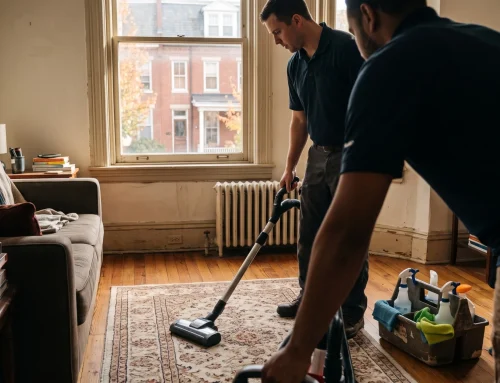
Wiping down a countertop usually takes care of visible dirt. But cleaning a carpet or sofa is a little more complicated. These materials absorb and hold onto things like oils, food particles, moisture, and organic residue.
A quick vacuum or surface wipe may not reach them.
Think about a pet accident on the living room carpet. You clean it immediately, and the stain disappears. A few days later, the smell comes back, especially when the room gets warm or humid. The problem may be residue that remained deeper in the carpet.
The same thing happens when we rely on air fresheners. They can make a room smell pleasant for a while, but the original odor may still be there.
Before reaching for another scented spray, it’s worth asking a simple question: What is actually causing this smell?
Common Sources of Persistent Household Odors
Pet Odors Trapped in Carpets and Upholstery
Anyone who shares a home with a dog or cat knows that pet odors can be stubborn.
Sometimes, it’s an obvious accident. Other times, it’s the everyday buildup of saliva, body oils, and dirt from paws and fur. These residues can settle into pet beds, sofa cushions, and carpet fibers.
Pet urine can be particularly difficult to deal with. Depending on how much was involved and how the carpet is constructed, it may have reached the backing or padding. Cleaning the surface alone might not be enough.
That’s why attempting to remove persistent household odors caused by pets isn’t always as simple as spraying a cleaner and wiping it away.
If the smell keeps returning to the same spot, avoid repeatedly soaking the area with different products. Check the cleaner’s instructions and make sure it’s suitable for the affected material. Some enzyme-based products can help break down specific organic residues, but they aren’t effective for every type of odor.
Carpets and Rugs That Hold More Than Visible Dirt
A carpet doesn’t need to look dirty to hold onto unpleasant smells.
Over time, dust, food crumbs, oils, and everyday dirt work their way between the fibers. In a busy household, these materials can build up gradually. You may not notice until a room starts smelling stale.
Vacuuming helps considerably, but it has its limits. It removes loose dirt and debris without necessarily reaching every residue embedded in the carpet.
Rugs can be another trouble spot. A little water from wet shoes, a spilled drink, or a pet accident may seem harmless. But if the rug stays damp underneath, an unpleasant smell can develop.
For carpet cleaning Baltimore homeowners arrange, the method matters just as much as the cleaning itself. Using too much water or an unsuitable product can leave a carpet damp longer than expected.
Upholstery and Frequently Used Furniture
Your sofa probably gets more use than you realize.
Someone eats lunch on it. The dog curls up on the cushions. Kids climb over it after playing outside. And all the while, fabric can collect oils, dust, food particles, and other residues.
Eventually, the furniture may develop a smell that seems to come out of nowhere.
Before trying to clean it, check the manufacturer’s care instructions. Not every fabric can be treated with water, and using the wrong product may cause discoloration or damage.
For homeowners looking into upholstery cleaning Baltimore services, it’s worth considering the fabric type and the source of the odor rather than assuming every sofa needs the same treatment.
Moisture and Other Hidden Odor Sources
Sometimes, the smell has nothing to do with the carpet or sofa.
A trash bin that wasn’t washed properly, a damp bath mat, a slow-draining sink, or a wet rug tucked away in a corner can all contribute to lingering odors.
Moisture deserves particular attention. If a material has been cleaned but hasn’t dried properly, it may begin to smell musty.
That doesn’t automatically mean there’s mold. A musty smell alone cannot confirm its presence. However, recurring moisture, visible mold, or a persistent unexplained odor should not be ignored.
If you keep cleaning the same area without getting rid of the smell, take a closer look at what’s happening underneath or behind it.
How to Remove Persistent Household Odors Without Masking Them
You don’t necessarily need to deep clean your entire home every time an unpleasant smell appears. Start with the area that’s bothering you and work through it carefully.
- Find the source. Notice where the smell is strongest. Is it near the sofa, the carpet, the kitchen sink, or the bathroom?
- Check the usual suspects. Look at pet bedding, cushions, rugs, trash containers, and damp fabrics. If the smell seems to come from beneath furniture, check there too.
- Remove loose dirt first. Vacuum the affected carpet or upholstery using a suitable attachment. If the source is a trash container or drain, remove any visible residue.
- Use the right cleaning product. Choose something designed for the specific residue and surface. A pet stain cleaner, for example, may not be suitable for delicate upholstery.
- Don’t overdo the moisture. Follow the product directions. Applying more cleaner or water than recommended can make the problem harder to resolve.
- Let the material dry completely. Open windows when conditions allow, improve airflow, and avoid putting damp cushions or rugs back into place.
- Deal with whatever caused the smell. If the issue is a recurring pet accident or moisture problem, cleaning alone won’t prevent it from happening again.
- Check the area once it’s dry. Give the material time to dry before deciding whether another treatment is needed.
It’s tempting to spray something fragrant and move on. But if the odor keeps coming back, the source probably needs more attention.
Are Green Cleaning Products Effective for Pet and Household Odors?
They can be. But the product needs to be suited to the job.
Some green cleaning products use surfactants to loosen dirt, oils, and other residues so they can be removed from a surface. Certain enzyme-based cleaners can also break down specific organic materials, including some residues associated with pet accidents.
That doesn’t mean every enzyme cleaner works on every odor. The formulation, the type of residue, and the surface all matter.
You may also have heard that white vinegar is a useful household deodorizer. Vinegar contains acetic acid and can help with certain types of residue, but it’s not a universal solution. It isn’t a disinfectant or a reliable mold-removal method, and it can damage some materials.
Never mix vinegar with bleach or other cleaning products.
The same goes for products marketed as green or environmentally friendly. Those labels don’t automatically mean a product is safer or more effective in every situation.
Read the instructions, check whether the product is suitable for the material, and use it as directed. A little care at this stage can prevent a cleaning problem from turning into a damaged carpet or piece of furniture.
When to Call Professionals to Remove Persistent Household Odors

There are times when you’ve done everything you reasonably can at home, but the smell still won’t go away.
Maybe the dog had an accident on the carpet several times. Perhaps the living room rug has accumulated years of everyday use. Or your sofa needs a cleaning method that you’re not comfortable attempting yourself.
This is where deep cleaning services in Baltimore may be worth considering.
Professional cleaning may be helpful when:
- Pet odors keep returning after household cleaning.
- Carpets have accumulated heavy soil or residue.
- Upholstered furniture needs material-specific care.
- A large area needs more attention than routine maintenance provides.
- You’re preparing your home for visitors or a seasonal reset.
- Keeping up with recurring cleaning has become difficult.
Carpet cleaning Baltimore homeowners seek for stubborn odors should address the affected material, not just make the surface look better.
The same applies to upholstery cleaning Baltimore residents may need for frequently used furniture. Different fabrics and odor sources call for different approaches.
Residential cleaning services in Baltimore may also help homeowners maintain their living spaces when regular cleaning no longer feels sufficient.
Of course, professional cleaning isn’t a guaranteed fix for every odor. If the source is inside the carpet padding, related to recurring moisture, or coming from somewhere else entirely, additional investigation may be necessary.
The important thing is to identify the problem before spending money on another round of cleaning.
A Cleaner-Smelling Baltimore Home Starts With the Right Cleaning Approach
A home can look clean and still have an odor problem. It happens. Carpets collect residue, sofas absorb everyday smells, and damp materials don’t always dry as quickly as we’d like.
The answer isn’t necessarily more fragrance or another full day of cleaning. Often, it’s a matter of finding the source and dealing with it properly.
Regular vacuuming, appropriate cleaning products, and thorough drying can go a long way. However, when you need to remove persistent household odors that have settled deep into carpets or furniture, a more targeted cleaning approach may be needed.
If you’ve tried cleaning the same area several times and the smell keeps returning, it may be time to get some help.
Interworld Cleaning provides residential cleaning services as part of its broader cleaning operations. We also serves residential cleaning needs in the Baltimore area.
Call Interworld Cleaning to discuss your carpet, upholstery, or residential cleaning needs in Baltimore.