

Walk into almost any office at 8:00 AM, and things look fine on the surface. Even without a detailed office cleaning checklist, the trash cans are empty, the lobby carpet has fresh vacuum lines, and the conference table is clear. Yet by mid-afternoon, fingerprints show up on glass doors, dust settles along window ledges, and shared breakroom appliances feel sticky.
For facility managers, office managers, and property owners evaluating commercial cleaning services in Baltimore, this disconnect is a familiar operational headache. A workspace can appear neat and organized without actually receiving thorough, consistent maintenance.
Visible Tidiness vs. True Commercial Cleaning Quality
Visual order is often mistaken for genuine cleanliness, but the two represent very different operational outcomes. Therefore, understanding this distinction helps decision-makers evaluate what they are actually paying for when hiring a commercial cleaning company in Baltimore.
-
General tidiness vs. actual cleaning: Straightening chairs and emptying waste bins make an office look presentable, while cleaning physically removes soil, dust, and residues from surfaces.
-
Surface-level wiping vs. detailed janitorial maintenance: A quick pass over open desk spaces misses edges, undersides, and crevices where buildup accumulates over time.
-
Removing visible debris vs. addressing high-touch points: Paper scraps on the floor stand out immediately, whereas invisible oils and residues on door handles require targeted attention using surface-compatible products and clean microfiber cloths.
-
Cleaning, sanitizing, and disinfecting: Ordinary cleaning removes dirt and organic matter using soap or detergent. Sanitizing reduces bacteria on surfaces to levels considered safe by public health standards. By contrast, disinfecting uses EPA-registered products according to label dwell-time instructions to inactivate specific pathogens. One process does not automatically accomplish the others.
-
Task completion vs. consistent standards: Checking boxes on a nightly route sheet means little without measurable commercial cleaning standards guiding how each surface is treated.
Commonly Overlooked Areas on an Office Cleaning Checklist
When cleaning crews are pressed for time or working from a vague task list, attention naturally gravitates toward obvious, eye-level surfaces. As a result, neglected zones begin to show wear over weeks and months.Because foot traffic, facility usage, and surface materials vary across a building, these areas require tailored frequencies rather than a one-size-fits-all approach.
Reception and Common Areas
-
Door handles, push plates, and elevator call buttons
-
Reception counters and visitor sign-in touchpoints
-
Light switches and shared wall controls
-
Corners, baseboards, and areas underneath lobby seating
-
Glass entry doors and interior glass partitions
Workstations and Meeting Rooms Checklist
-
Desk edges and shared collaborative work surfaces
-
Conference room tables, particularly along the edges and undersides
-
Chair arms, adjustment levers, and frequently touched furniture frames
-
Shared conference phones and equipment, where client policies permit cleaning
-
Waste bins and the surrounding floor perimeter
Breakrooms and Kitchen Areas
-
Countertops and food preparation surfaces
-
Appliance handles, refrigerator doors, and microwave interiors
-
Sink basins, fixtures, and faucet handles
-
Cabinet pulls and shared dispenser levers
-
Flooring beneath dining tables and around trash receptacles
Restrooms
-
Faucet handles, soap dispensers, and flush controls
-
Toilet bases, behind fixtures, and surrounding floor tiles
-
Stall partition latches and entry door hardware
-
Mirrors, sink ledges, and paper towel dispensers
-
Consumable supply levels for soap, paper towels, and tissue
Office Floors and Less Visible Areas
-
Floor edges, corners, and transitions between carpet and hard surfaces
-
Areas beneath desks, filing cabinets, and low-clearance furniture
-
Carpet edges and walk-off mats at building entrances
-
Accumulated dust on air vents, diffusers, and accessible ledges
-
Tracked-in spots near high-traffic entryways
Why Office Cleaning Tasks Are Missed Even When Spaces Look Tidy
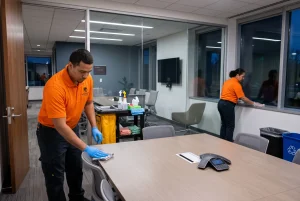
Consistent gaps in office cleaning services Baltimore businesses rely on rarely stem from a single careless worker. More often, they point to structural breakdowns in how the cleaning program is planned and managed.
An unclear cleaning scope is the most common culprit. For example, a property manager may assume interior glass or appliance exteriors are included in nightly service, while the contractor follows a narrower agreement focused strictly on trash and floors. Time constraints also play a major role. When an assigned shift is too short for a building’s square footage, crews naturally prioritize visible areas over detailed work.
Additionally, poor task prioritization treats low-use executive suites the same as high-traffic breakrooms. Without clear communication channels for reporting recurring issues—or defined expectations for office sanitation Baltimore MD facilities require—small oversights quietly become standard practice.
What a Proper Office Cleaning Checklist and Program Include
Reliable commercial janitorial services operate on structure, clear responsibilities, and routines matched to how a building actually functions. Specifically, a well-built program incorporates routine upkeep of workstations and shared spaces, thorough restroom care with supply replenishment, breakroom maintenance, waste removal, floor care, targeted cleaning of high-touch surfaces, periodic deep cleaning, clear communication, and regular quality checks.
While exact schedules depend on building size, occupancy, and the agreed service scope, a balanced office cleaning checklist organizes tasks by frequency:
Practical Office Cleaning Checklist for Facility Managers
Use these ten checkpoints during a routine walkthrough to identify potential gaps in your current professional office cleaning arrangement:
-
Are reception areas, glass entry doors, and walk-off mats consistently free of smudges and tracked-in debris?
-
Are frequently touched surfaces—such as door handles, light switches, and shared counters—explicitly covered in your scope of work?
-
Are restrooms thoroughly cleaned around fixture bases and adequately stocked with soap and paper supplies?
-
Are breakroom counters, sinks, and exterior appliance handles wiped down without sticky residue?
-
Are carpets and hard floors maintained according to the actual foot traffic in each zone?
-
Are waste and recycling bins emptied reliably before overflowing?
-
Are corners, baseboards, and accessible vents periodically cleared of dust buildup?
-
Are recurring cleaning complaints logged and resolved systematically rather than fixed only once?
-
Does your vendor follow a clearly documented daily, weekly, and periodic schedule?
-
Does the work performed on-site match your signed service agreement?
When to Reconsider Your Current Janitorial Service
One missed trash bin or an occasional dusty ledge does not automatically mean you need a new vendor. Every operation experiences minor hiccups. However, patterns tell a different story.
Consider re-evaluating your facility management janitorial solutions if the same areas are repeatedly overlooked despite feedback. Other red flags include restrooms running out of supplies between visits and floors looking dull despite routine mopping. Other warning signs include unresolved complaints, shifting building occupancy that your current schedule no longer supports, and a provider that fails to communicate clearly about expectations and accountability.
Why a Clearly Defined Cleaning Partner Matters
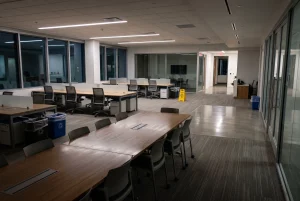
When you work with an experienced janitorial partner, facility maintenance shifts from reactive troubleshooting to predictable upkeep. In addition, a structured program reduces overlooked tasks, establishes clear accountability, aligns cleaning frequency with workplace traffic, and relieves office and facility managers from constant supervision.
Choosing a provider familiar with diverse commercial environments ensures your cleaning plan adapts as your facility evolves. For organizations seeking dependable commercial cleaning services in Baltimore, Washington, DC, and Northern Virginia, Interworld Cleaning delivers full-service commercial, industrial, and residential janitorial solutions tailored to each property’s operational needs.
Looking Beyond Surface Appearances
An office that looks tidy at first glance is not always receiving the detailed care required to protect its surfaces and support daily operations. True consistency depends on a well-defined scope of work, realistic scheduling, attention to high-touch and out-of-sight areas, and open communication between facility decision-makers and their cleaning contractor.
If your current cleaning arrangement leaves recurring gaps or requires constant follow-up, exploring commercial cleaning services in Baltimore, Washington, DC, or Northern Virginia with an experienced partner can make a measurable difference. Visit Interworld Cleaning to learn more about our commercial cleaning and janitorial capabilities and contact our team to discuss your facility’s specific requirements.