Effective medical facility cleaning Baltimore healthcare teams rely on involves much more than removing visible dirt. A disinfected-looking patient room does not necessarily mean that harmful microorganisms have been eliminated. Blood residue, contaminated equipment, high-touch surfaces, and improperly handled cleaning materials can all contribute to healthcare-associated infections (HAIs).
For healthcare facility managers and Environmental Services (EVS) supervisors, maintaining consistent sanitation standards is an ongoing responsibility. Cleaning teams must follow documented procedures, use appropriate disinfectants, respect contact times, and prevent cross-contamination between patient care areas.
A standardized 7 step cleaning process hospital facilities can implement helps address these challenges. It establishes a repeatable workflow that supports infection prevention, protects cleaning personnel, and makes sanitation procedures easier to verify during inspections.
In 2026, healthcare facilities in Baltimore, MD, also face increasing expectations for documented cleaning performance rather than relying solely on visual inspections.
Why Medical Facility Cleaning Baltimore Standards Matter in 2026
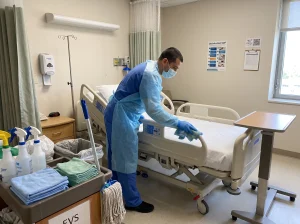
Healthcare-associated infections remain a significant concern for hospitals, outpatient clinics, and other medical environments. Frequently touched surfaces, shared equipment, and contaminated patient surroundings can contribute to pathogen transmission when cleaning procedures are inconsistent.
The CDC recommends routine and targeted environmental cleaning based on patient contact, surface contamination, and the level of risk. Its infection prevention guidance also emphasizes using EPA-registered disinfectants with appropriate microbiocidal activity.
Meanwhile, CMS requirements, Joint Commission accreditation standards, and Maryland health inspections make infection prevention practices and supporting documentation important considerations for healthcare administrators.
A visual inspection alone cannot establish whether a surface received the correct disinfectant or remained wet for the required contact time.
An effective hospital cleaning SOP should therefore combine physical cleaning procedures with documented verification.
A Practical 7-Step SOP for Medical Facility Cleaning Baltimore
The following seven steps provide a structured approach to routine hospital environmental cleaning. Facilities should adapt the sequence to their infection prevention policies, room classification, patient-care activities, and manufacturer instructions.
1. Trash and Biohazard Removal
Begin by removing general waste and handling regulated medical waste according to the facility’s waste-management procedures.
Cleaning personnel must distinguish ordinary trash from contaminated materials, including items containing blood or other potentially infectious materials (OPIM).
Under OSHA’s Bloodborne Pathogens Standard (29 CFR 1910.1030):
- Wear appropriate PPE before handling potentially contaminated materials.
- Place regulated waste in designated, properly labeled or color-coded containers.
- Dispose of contaminated sharps immediately in closable, puncture-resistant, leakproof containers.
- Never manually compress waste bags or reach inside waste containers.
Employees should never handle discarded needles directly. Report unexpected sharps or hazardous materials through the facility’s established safety procedures.
2. High Dusting
After waste removal, address elevated surfaces before cleaning lower surfaces.
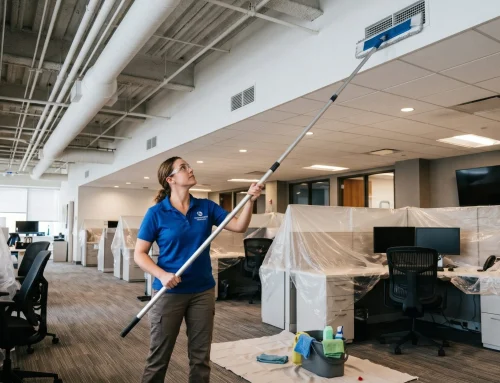
High dusting includes accessible vents, ledges, light fixtures, shelving, and other horizontal surfaces where dust can accumulate.
Use appropriate dust-control equipment rather than dry sweeping or techniques that unnecessarily disperse particles into the surrounding environment.
Work from higher surfaces downward. This prevents dust and debris from settling on surfaces that have already been cleaned and disinfected.
Pay particular attention to areas surrounding patient beds and frequently used clinical equipment.
3. Damp Wiping High-Touch Surfaces
High-touch surfaces require particular attention because patients, visitors, and healthcare workers repeatedly interact with them.
Examples include:
- Bed rails and bedside tables.
- Door handles and light switches.
- Call buttons and remote controls.
- Countertops and frequently handled equipment.
- Chair arms and accessible handrails.
Use a detergent or an appropriate cleaning product to remove visible soil before applying a separate disinfectant when required by the product instructions.
Organic material, including blood and bodily fluids, can interfere with disinfectant effectiveness. Mechanical cleaning helps remove this material and reduces the microbial burden before disinfection.
Use fresh microfiber cloths and follow a consistent clean-to-dirty wiping pattern. Fold each cloth in half and then in half again to create eight usable faces. Change to a clean face regularly.
Never double-dip a used cloth into a clean disinfectant solution. Replace contaminated cloths rather than transferring microorganisms between surfaces.
4. Restroom Sanitization
Hospital restrooms require careful attention because moisture, frequent use, and contaminated surfaces create additional sanitation challenges.
Clean and disinfect sinks, faucets, toilets, grab bars, flush handles, dispensers, and other frequently touched fixtures.
Follow a designated cleaning sequence that moves from cleaner surfaces toward more contaminated areas. Use separate cloths and equipment for toilets and other restroom surfaces.
Allow disinfectants to remain wet for their labeled contact time. Do not immediately wipe away the product unless the manufacturer’s instructions require it.
Restroom cleaning tools should never be transferred into patient-care areas without the facility’s approved cleaning and disinfection procedures.
5. Dust Mopping
Once elevated and horizontal surfaces have been addressed, clean the floor using an appropriate dust-mopping method.
Remove loose debris, hair, and dust before wet mopping. This prevents dry particles from spreading across the floor during subsequent cleaning.
Use designated equipment for individual patient-care zones and replace contaminated mop heads according to the facility’s procedures.
Avoid moving the same contaminated mop through multiple patient rooms. Floor-cleaning equipment can become a vehicle for cross-contamination when improperly managed.
6. Damp Mopping with Hospital Disinfectant
Apply an appropriate hospital-grade floor disinfectant when required by the facility’s infection prevention protocol and the product’s intended use.
Select an EPA-registered product compatible with the flooring material and effective against the pathogens of concern.
The disinfectant’s wet-contact time is particularly important. Depending on the product and its EPA-approved label claims, required contact times may range from one to ten minutes or longer.
For example, facilities addressing MRSA, VRE, or Clostridioides difficile (C. difficile) must select products with the appropriate labeled efficacy. C. difficile spores require a product specifically registered with a sporicidal claim.
Keep the surface visibly wet for the full labeled contact time. A quick application followed by immediate drying does not provide the same disinfection performance.
Never mix chemicals or improvise product concentrations. Follow dilution, application, ventilation, and safety instructions.
7. Final Quality Inspection and Digital Sign-Off
The final step confirms that cleaning tasks have been completed and the room meets the facility’s established turnover requirements.
An EVS supervisor or designated team member should verify:
- High-touch surfaces have been cleaned and disinfected.
- Restrooms and floors meet established sanitation standards.
- Waste has been removed and containers replaced.
- No visible soil or cleaning residue remains.
- Required contact times and cleaning procedures have been followed.
- Cleaning equipment has been removed and stored appropriately.
Digital verification can strengthen this process. QR-code room logs, timestamped checklists, and electronic task records help supervisors track completed assignments and identify missed steps.
Some facilities also use ATP bioluminescence testing to evaluate residual organic material on selected surfaces. However, ATP testing measures organic contamination, not specific pathogens, and cannot independently prove that a surface is microbiologically safe.
Three Infection Control Standards for Medical Facility Cleaning Baltimore
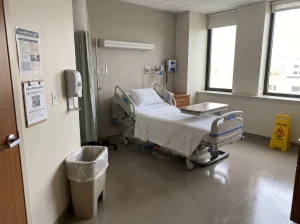
A reliable 7-step hospital cleaning process depends on more than following a checklist. Three practices deserve particular attention.
Respect disinfectant contact times. Always follow the EPA-registered product label. Contact time, dilution, and pathogen-specific efficacy determine whether the disinfectant is being used correctly.
Prevent cross-contamination. Use designated microfiber cloths, appropriate color-coding systems, fresh cleaning solutions, and separate equipment for different patient-care zones. Never reuse a contaminated cloth or mop without proper reprocessing.
Maintain OSHA-compliant practices. OSHA’s 29 CFR 1910.1030 requires appropriate exposure controls, PPE, housekeeping procedures, and safe handling of regulated waste when employees have occupational exposure to blood or OPIM. Proper PPE donning and doffing, hand hygiene, and employee training must be incorporated into the facility’s safety program.
Building an Audit-Ready Medical Facility Cleaning Baltimore Program
For medical facility managers, a well-designed cleaning SOP should make responsibilities clear and performance measurable.
Healthcare facilities should maintain written cleaning schedules, area-specific procedures, employee training records, disinfectant information, and completed inspection logs.
Digital room records can make it easier to retrieve cleaning histories during internal reviews or external inspections. However, technology should support—not replace—trained personnel, supervisory oversight, and established infection prevention policies.
Facilities seeking reliable medical facility cleaning Baltimore providers should evaluate their experience with healthcare environments, staff training, contamination controls, and ability to follow facility-specific protocols.
The right hospital janitorial services partner understands that patient-care environments require a different level of attention than ordinary commercial buildings.
Protect Patients with a Consistent Hospital Cleaning Process
A disciplined 7 step cleaning process hospital teams can follow helps reduce preventable contamination, protect vulnerable patients, and maintain consistent environmental hygiene.
For medical facility cleaning Baltimore administrators oversee, effective sanitation also means having documented procedures that demonstrate how cleaning tasks are completed, checked, and managed.
Interworld Cleaning provides regional commercial, industrial, and medical janitorial solutions designed around facility-specific cleaning requirements. Whether you manage a medical office, outpatient clinic, or larger healthcare environment, consistent sanitation and accountable cleaning practices matter.
Looking for dependable healthcare infection control cleaning, OSHA compliant medical sanitation, or commercial cleaning services Baltimore MD?
Visit Interworld Cleaning to schedule a facility walkthrough and discuss a customized cleaning plan or request a quote.