

Moving out of a Baltimore rental during the late-August or September turnover brings a very specific kind of exhaustion—and without a structured move-out cleaning checklist, getting your deposit back can quickly feel overwhelming. You’re sweating in muggy humidity, tripping over taped boxes, and wondering how you accumulated so much stuff. In fact, by the time the moving truck pulls away, your back hurts, your feet throb, and you want nothing more than to collapse.
Then you turn around and look at the empty apartment.
Walls are covered in mysterious scuffs, baseboards look like they’ve grown fur, and the oven looks like a war zone. Meanwhile, your landlord is scheduled for a walkthrough in twelve hours, and thousands of dollars from your security deposit hang in the balance. However, a quick sweep won’t cut it. After all, property managers in this city have seen every trick in the book, and during peak moving season, they scrutinize every detail.
If you want your cash back, you need a plan targeting the exact spots inspectors flag. Therefore, having a reliable move-out cleaning checklist Baltimore renters can depend on is the best way to survive the rush and keep your deposit intact.
Why You Need a Move-Out Cleaning Checklist for the Baltimore Rush
The late-summer lease turnover across Baltimore is pure chaos. Because students, young professionals, and families are shifting homes all at once, truck rentals are scarce, and traffic is brutal.
In reality, physical exhaustion is the main reason tenants lose security deposits. For example, after packing for three days straight, nobody wants to spend five hours scrubbing kitchen grease. As a result, you get tired, skip “invisible” spots, and hand over the keys hoping for the best.
That is precisely where landlords catch you. They don’t look at the middle of the living room floor; instead, they check places you were too exhausted to touch. Furthermore, if they hire a crew for an end-of-lease cleaning, they can deduct top-dollar contractor rates right out of your refund under Maryland Security Deposit Laws.
What Inspectors Check on Your Move Out Cleaning Checklist
Landlords don’t inspect a home the way you live in it. In fact, they search with a magnifying glass for grime that the next tenant will complain about. Consequently, inspectors almost always hit these hidden spots first:
-
Top edges of doors and trim: Dust settles here silently for months.
-
Inside cabinets and drawers: Lingering crumbs, hair, and sticky syrup rings.
-
Light fixture globes and fan blades: Trapped insects and grease-coated dust.
-
Window tracks: Pollen, dead bugs, and black grime trapped in grooves.
-
Behind and under heavy appliances: Years of stray food and dust bunnies.
Ultimately, working off a battle-tested move-out cleaning checklist Baltimore inspectors respect lets you focus your remaining energy where it counts.
The Room-by-Room Move-Out Cleaning Checklist Baltimore
To get through this without losing your mind, tackle your rental room by room. First, Grab a caddy, turn on music, and work methodically.
Kitchen: Where Deposits Go to Die
The kitchen takes the longest. Cooking oils vaporize, mix with dust, and settle on surfaces into a sticky film.
-
Clear cabinets and drawers: Vacuum interiors first with a brush attachment to pull crumbs from back corners. Wipe interior shelves, paying extra attention to handles where finger oils build up.
-
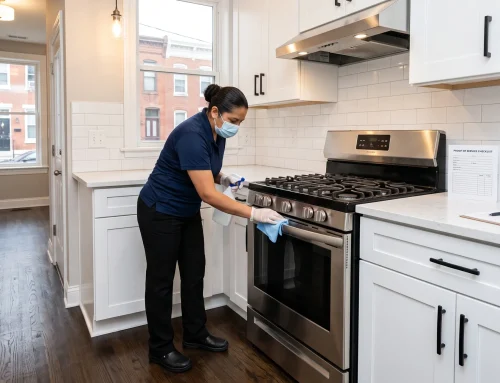
Tackle the oven and stovetop: Skip harsh chemicals that fill the place with toxic fumes. Apply an eco-friendly degreaser directly to baked-on carbon inside the oven cavity. Let it sit for twenty minutes to break down grease naturally so you can wipe it out without scratching enamel. Soak metal range hood filters in hot, soapy water.
-
Deep clean the refrigerator: Empty every item. Wash crisper drawers in the sink and wipe door gaskets where crumbs hide. Carefully slide the unit forward to vacuum dust off coils—a classic inspection check item—and clean out the drip pan.
-
Sanitize sink and dishwasher: Scrub mineral stains off the faucet and run a cycle on your empty dishwasher with white vinegar to remove buildup and stale odors.
Bathrooms: Soap Scum and Hard Water
Baltimore water leaves stubborn mineral rings if left untreated. You want surfaces shining so brightly the inspector moves right along.
-
Glass shower doors and tile: Never scrub glass doors with abrasive pads, or you’ll scratch them. Use a non-abrasive acidic cleaner or specialized paste to dissolve hard-water deposits and soap scum safely.
-
Grout and caulk lines: Treat mildew buildup around the tub base or shower corners with a targeted grout cleaner and a medium-bristle brush.
-
Toilets inside and out: Scrub the bowl, porcelain base, bolt covers near the floor, and behind the tank where dust clings.
-
The exhaust fan grille: Vacuum the fan cover directly. Heavy dust here screams neglect to an inspector.
Bedrooms and Living Areas: The Finishes

Once furniture is gone, every scuff mark stands out clearly.
-
Baseboards and door frames: Wipe baseboards and door trim end to end with a damp microfiber cloth to remove clinging pet hair and dust.
-
Window sills and tracks: Vacuum loose dirt from window tracks, then scrub tight grooves with an old toothbrush and warm soapy water.
-
Walls and switches: Dab wall scuffs gently with a damp melamine sponge so you don’t strip flat paint. Wipe grease off light switch plates.
-
Light fixtures: Dust fan blades and carefully remove glass ceiling globes to wash out trapped bugs.
Floors: The Last Step Out the Door
Save floors for last so you aren’t walking over clean surfaces while working.
-
Hard floors: Sweep loose debris, including under cabinets. Mop with a well-wrung microfiber mop—never soak laminate or hardwood.
-
Carpets: Vacuum slowly, going over high-traffic spots twice and running the nozzle right against baseboard edges where dirt accumulates.
Do You Offer Move-In/Move-Out Cleaning Services?
Yes, absolutely! That is one of our primary specialties at Interworld Cleaning. We answer this question every day from frantic tenants facing tight deadlines.
Moving is exhausting. When you calculate physical strain, time spent, and the cost of buying specialized supplies, doing it yourself isn’t always smart. Hiring a professional team for a deposit return cleaning is a practical investment that protects your refund.
When you hire Interworld Cleaning for a move-out cleaning service, we send experienced crews who know walkthrough standards inside and out. As a premier provider of residential cleaning in Baltimore, MD, we bring heavy-duty commercial equipment and eco-friendly products that turn hours of agonizing labor into a non-issue. We cover every item on this move-out cleaning checklist Baltimore landlords use, ensuring your place passes inspection on the first try.
Save Your Deposit and Your Sanity with Interworld Cleaning
You don’t have to spend your last night in your old apartment on your hands and knees scrubbing baseboards. Following a structured plan lets you take control of your move and walk away with your full security deposit intact.
If you’d rather hand the mop to someone else and focus on settling into your new home, let our pros handle the dirty work. Whether you need a full professional deep clean or dedicated turnover service, Interworld Cleaning is here to make your move hassle-free.
Ready to secure your deposit without the stress? Contact our team today or get a free quote directly at Interworld cleaning.