

Few things degrade the appearance of a beautifully designed bathroom or a commercial facility restroom faster than the cloudy, chalky white film left behind by hard water. You spend hours scrubbing, try every retail spray on the shelf, and for a few moments while the surface is wet, the stains seem to vanish.
As soon as the moisture evaporates, however, that stubborn, ghost-like residue returns. Homeowners, property managers, and facility directors alike face this ongoing frustration. It leads many to wonder if you can ever really remove hard water stains, or if your glass enclosures and chrome fixtures are permanently ruined.
The short answer is yes, you can remove them completely. Success depends entirely on understanding the underlying science of mineral accumulation and applying the correct chemical remediation.
Standard wiping and traditional multi-purpose sprays are fundamentally unequipped to handle true mineral scaling. To fully restore these surfaces, you must transition from basic superficial maintenance to a targeted, restorative approach.
The Science Behind the Scum: Why Hard Water Stains Are So Stubborn
To defeat these eyesores, it helps to understand what you are actually fighting. Hard water stains are not simply accumulated dirt or soap residue. They are literal geological formations bond-fused to your household or commercial surfaces.
Calcium, Magnesium, and the Evaporation Process
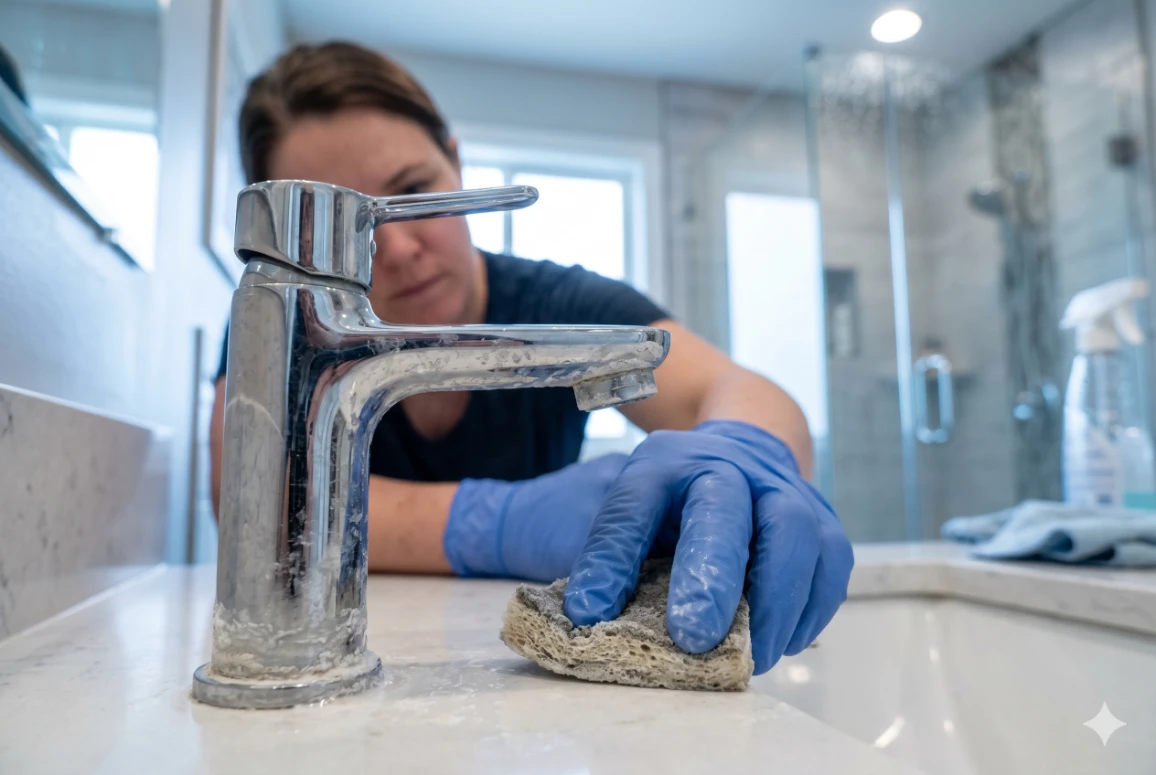
When tap water contains elevated concentrations of dissolved minerals—primarily calcium carbonate and magnesium—it is classified as hard water. Every time water hits a glass shower door, a porcelain sink, or a stainless steel faucet and is left to air dry, a microscopic chemical transformation occurs.
The pure H2O evaporates into the air, but the heavy calcium and magnesium molecules cannot transition into gas. Instead, they drop out of solution, crystalize, and bond tightly to the underlying surface. This mineral layer builds continually with every single use of the fixture.
The Danger of Permanent Surface Etching
Over weeks and months, these mineral deposits build upon one another layer by layer. The structural danger arises when these alkaline deposits are left unaddressed on glass. Despite its smooth appearance to the naked eye, glass is highly porous at a microscopic scale.
The highly alkaline minerals interact chemically with the silica in the glass, eventually instigating a process called etching. Once etching occurs, the minerals have physically carved microscopic pits into the material itself.
At that stage, the cloudiness is no longer a surface stain—it is permanent physical damage that no cleaning solution can entirely reverse. This fast-acting degradation makes timely professional intervention absolutely essential.
The Critical Mistake of Aggressive DIY Scrubbing
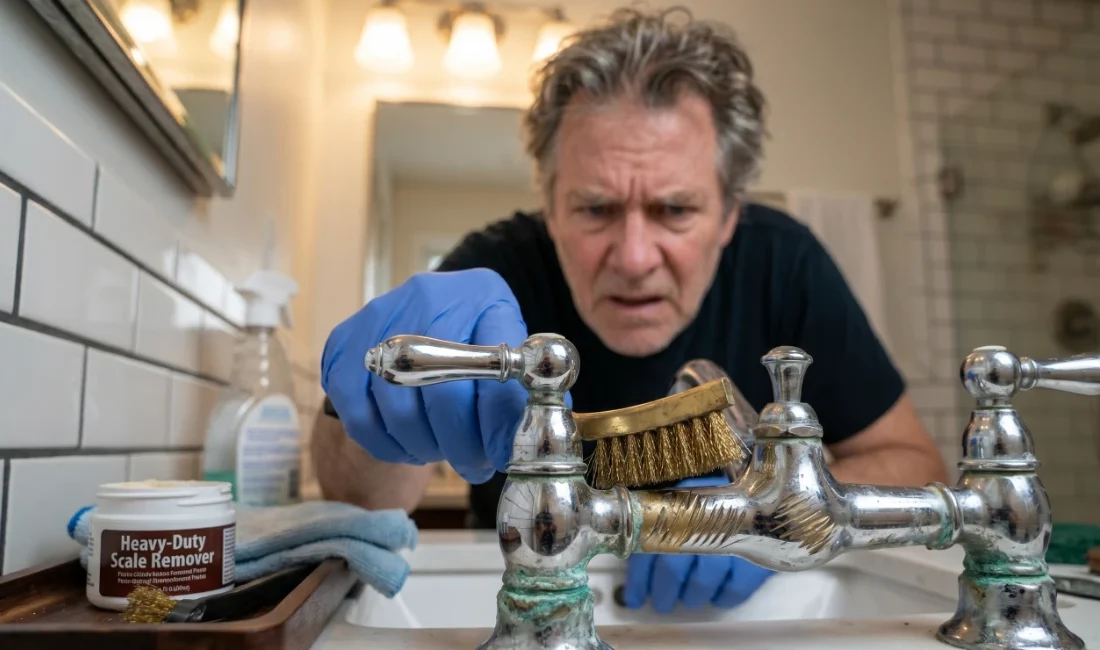
When faced with resilient white crust on fixtures, the instinctive human reaction is to apply brute force. People reach for abrasive scouring pads, steel wool, or heavy pumice stones, believing they can mechanically scratch the stains away.
This approach is highly counterproductive. While you might break apart some of the mineral crust, mechanical abrasion frequently scratches the delicate underlying glass, acrylic, or chrome plating.
Those microscopic scratches do not just ruin the aesthetic appearance of your fixtures. They create perfect, rough anchor points where future mineral deposits and soap scum can attach even more aggressively.
Similarly, relying on improperly formulated chemical mixtures can strip the protective finishes off high-end faucets. This turns a minor cosmetic stain into an expensive replacement bill that could have been completely avoided with proper care.
The Professional Protocol to Remove Hard Water Stains Safely
Professional technicians do not rely on elbow grease; they rely on precise chemical reactions. Because mineral deposits are highly alkaline, they must be broken down using targeted, low-pH acidic solutions. This acid-base neutralization reaction liquefies the hardened crystal matrix without harming the stable substrate beneath.
To execute a true restorative deep cleaning of hard-water-affected areas, a highly trained team follows a strict, systematic process:
- Surface De-Greasing: Before addressing the minerals, technicians remove the top layer of organic body oils, skin cells, and soap scum using an alkaline detergent. If this layer remains, it acts as a waterproof shield, preventing acidic treatments from reaching the minerals below.
- Acidic Chemical Application: Specialized, commercial-grade mild acids—such as phosphoric, oxalic, or safety-buffered hydrochloric acid solutions—are applied carefully to the targeted zones.
-
Dwell Time Management: The chemical must be allowed to dwell on the surface for a calculated period. This allows the acid to actively dissolve the molecular bonds of the calcium and magnesium deposits without drying out.
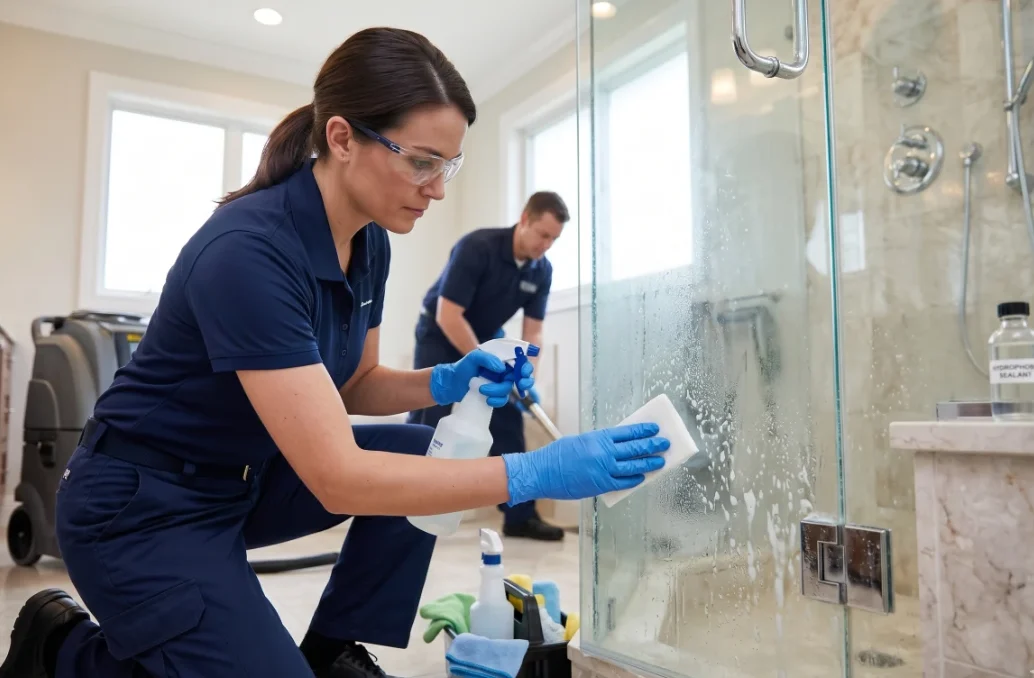
4.Agitation with Non-Marring Media: Technicians gently agitate the liquefied slurry using specialized white nylon pads or ultra-fine polishing pads that are certified scratch-free for glass and metal surfaces.
5.Extraction and Neutralization: The dissolved mineral sludge is thoroughly rinsed away. A neutralizing rinse is applied to bring the surface pH back to a safe, balanced level, stopping any ongoing chemical activity.
6.Protective Sealing: To prevent immediate re-deposition, high-end cleaning professionals apply a hydrophobic micro-coating to glass surfaces. This sealant forces water to sheet off cleanly rather than pooling and evaporating.
The Local Context: Baltimore’s Mineral Footprint
The severity of hard water scaling varies significantly depending on your geographic location. In Baltimore, MD, municipal tap water sourced from the Liberty, Loch Raven, and Susquehanna reservoirs is generally classified as moderately hard, hovering around 6.4 grains per gallon or roughly 80 to 116 parts per million.
While city water might not scale as aggressively as the extreme well water found in the deeper Piedmont regions of Baltimore County, it is more than enough to create significant aesthetic and functional issues over time.
The local climate—marked by hot, humid Maryland summers—accelerates the evaporation rate of standing water on bathroom and kitchen fixtures. This drastically speeds up the rate at which white scale forms on plumbing fixtures and commercial glass storefronts or windows.
If your facility or residential property relies on private well systems in the surrounding areas, the mineral concentration can skyrocket. This environmental reality makes routine preventative care an absolute necessity for local property owners.
Elevating Restorative Care with Expert House Cleaning Services
For busy homeowners and commercial property managers, maintaining this level of scientific precision is rarely feasible within a standard daily routine. This is where investing in professional house cleaning services or commercial facility maintenance programs becomes highly valuable.
A standard cleaning protocol keeps dust and surface grime at bay, but restoring surfaces that have suffered months of mineral exposure demands deep cleaning expertise. Professional teams bring industrial-grade equipment, specialized safety protocols, and a deep understanding of surface material tolerances to your property.
By treating the issue proactively, you preserve the structural integrity of your glass shower doors, commercial presentation areas, and expensive plumbing infrastructure. This completely eliminates the massive financial burden of premature replacement costs.
Secure a Pristine, Scale-Free Environment
While stubborn hard water stains are an undeniable nuisance, they are not an absolute death sentence for your property’s fixtures. Through proper chemical breakdown, meticulous dwell times, and protective surface sealing, even the most clouded surfaces can be restored to a crystal-clear, mirror-like finish.
Achieving these flawless results without damaging your expensive assets requires a level of training and technical precision that goes far beyond generic cleaning advice. For residential and commercial property owners seeking flawless presentation and long-term asset protection, Interworld Cleaning represents the gold standard in specialized maintenance.
Recognized widely as the best cleaning company in Baltimore, our dedicated technicians utilize advanced restorative protocols to eliminate scale, reverse dullness, and safeguard your facility’s surfaces.
Do not let unsightly mineral scale ruin the professional image of your business or the comfort of your home. Discover the profound impact of scientific surface restoration. Contact Interworld Cleaning today to schedule a detailed evaluation and secure a custom cleaning program tailored precisely to your property’s structural needs.