


If you just want the fast version: mix a small bowl of warm water with a few drops of dish soap, dip a microfiber cloth in, wring it out well, then wipe the doors and dry them with a clean towel. In most everyday situations, that straightforward combination will remove grease from kitchen cabinets without causing any damage to the finish. Please read the entire article from expert cleaners in Baltimore for specifics and detailed instructions.
Nothing compares to your fingers sticking to the cabinet door when you reach for a mug. Kitchen cabinet grease can catch you off guard. One day everything looks fine, and then suddenly the doors around the cooker feel tacky and a little yellow. The good news is that special products are not required.
Why do kitchen cabinets get so greasy?
A tiny bit of cooking oil in the air every time you fry, sauté, or even reheat leftovers. That mist floats around, lands on cabinet doors, and slowly mixes with dust. If you touch it with damp hands, it smears and builds up.
Cabinets right above the stove and next to the range hood usually get hit the hardest. If you cook a lot of bacon, stir-fries, or anything deep fried, that buildup shows up faster.
Knowing this helps: your goal isn’t just to clean greasy kitchen cabinets once. It’s to get them clean now and then keep on top of it with quick, easy wipe-downs.
Step 1: Start with the gentlest cleaner (dish soap + warm water)
If the grease is light to moderate, basic dish soap works surprisingly well. Dish soap is made to cut through oil without being too harsh on surfaces.
What you need:
- A small bowl or bucket
- Warm (not boiling) water
- A few drops of dish soap
- A soft microfiber cloth or old T-shirt
- A dry towel

How to do it:
- Mix warm water with a few drops of dish soap. You want light suds, not a bubble bath.
- Dip the cloth, wring it out well so it’s damp, not dripping.
- Wipe the cabinet door in small sections. Follow the grain if you have wood.
- For sticky spots, hold the damp cloth on the area for 5–10 seconds, then wipe. Let the warm, soapy water loosen the grease instead of scrubbing like crazy.
- Rinse the cloth in clean water, wring it, and go over the area again.
- Dry with a towel so water doesn’t sit on the surface.
Do a couple of doors first and check: if they feel smooth and not sticky, this might be all you need.
Step 2: Use a gentle baking soda paste for stubborn spots
Sometimes there are those corners near handles that just laugh at dish soap. That’s where a very mild scrub comes in.
You’ll need:
- Baking soda
- A little warm water
- Soft cloth or sponge (non-abrasive)
How to use it:
- Mix a spoonful of baking soda with just enough water to make a thick paste.
- Dab the paste on the greasy spot.
- Very gently rub in small circles. Don’t grind it in – think “massage,” not “sandpaper.”
- Wipe off with a damp cloth.
- Dry the area.
Baking soda gives you just enough “grit” to help remove grease from kitchen cabinets without tearing up the finish if you’re careful.
Step 3: Try a vinegar mix (for film and dullness)
If your cabinets look a bit cloudy or have that overall greasy film, a vinegar solution can help.
Simple vinegar cleaner:
- 1 part white vinegar
- 2 parts warm water
- Optional: a tiny drop of dish soap
Spray it lightly on your cloth (not directly on the cabinet), then wipe. Don’t soak real wood; just a light wipe, then a dry cloth after. Vinegar cuts through residue and helps cabinets look cleaner without that greasy shine.
If you notice any weird reaction with the finish (dull patch, color change), stop and switch back to dish soap only. Every finish is a bit different.
What to avoid when you clean greasy kitchen cabinets
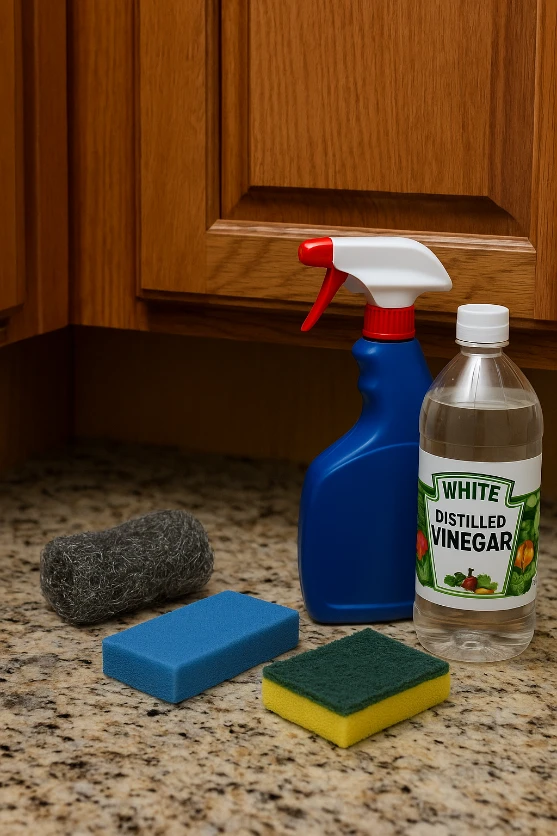
Here’s where a lot of people accidentally damage their doors:
- No steel wool, scrub pads, or magic erasers on delicate finishes. These can scratch or dull the surface.
- Avoid super strong degreasers unless you’ve tested a tiny hidden spot first. Some can strip paint or stain.
- Don’t flood the cabinet with water. Especially wood. Excess moisture can swell edges and make things peel over time.
- Be careful with pure vinegar or ammonia on wood. Always dilute and test first.
If you’re ever in doubt, test any cleaner on the inside edge of a door where you won’t see it.
When it makes sense to call commercial cleaners
If your home kitchen is extremely greasy from years of buildup, or if you’re dealing with a restaurant, office break room, or small café, DIY might not cut it.
In those cases, a commercial cleaning company can save a lot of time and frustration. Professional commercial cleaners have stronger products, tools like steamers, and the experience to know which finishes can handle which chemicals.
If you’re local and running a business, you’ll see plenty of commercial cleaning services in Baltimore that handle kitchen and cabinet degreasing as part of a larger service. This is especially helpful if:
- Cabinet doors are heavily yellowed and sticky.
- There’s grease up near the ceiling and vents.
- You need the job done after hours so it doesn’t interrupt your staff or customers.
They can also set up a regular schedule so the grease never gets to that “oh no” level again.
Quick weekly routine to keep grease away
Once you’ve done the big clean, staying ahead of it is much easier. Here’s a simple routine you can realistically keep up with:
- Pick one “cabinet day” a week. Maybe Sunday afternoon or right after your weekly grocery run.
- Mix a small bowl of warm water and a few drops of dish soap.
- Wipe just the cabinets closest to the stove. These are the ones that get greasy fastest.
- Dry quickly with a towel.
This can take 5–10 minutes, tops. You don’t need a whole cleaning marathon every time – just a small habit that keeps the worst buildup away.
If your cabinets are just a bit sticky, the dish-soap-and-warm-water method, plus a baking soda spot treatment, will usually be enough to clean greasy kitchen cabinets and get them back to smooth. If you’re staring at thick, yellow layers in a busy kitchen – or you’re running a business space in Baltimore – that’s when bringing in professional commercial cleaners makes a lot more sense than fighting it alone.
Get Your Kitchen Cabinets Deep Cleaned
When the grease on your cabinets feels like more than a quick wipe can handle, you don’t have to deal with it by yourself. Interworld Cleaning Service in Baltimore is known as one of the best cleaning companies in Baltimore, and our team of commercial cleaners handles greasy, hard-to-reach kitchen areas every day. As a local commercial cleaning company, we also provide a full range of commercial cleaning services in Baltimore for offices, medical buildings, warehouses, and more. If you’re struggling with stubborn grease on your kitchen cabinets and want them properly deep cleaned, visit our kitchen cleaning service page and let our team take care of it for you.