

Drywall dust has a special talent: you clean it, feel proud for about 10 minutes… and then it shows up again on the windowsill like it pays rent.
Here’s the truth: drywall dust keeps “coming back” because it’s ultra-fine, it floats, it hides in soft surfaces, and it gets re-blown by your HVAC system and foot traffic. The fix is a simple pattern: contain the dust → remove it with HEPA → wipe it wet → rinse → repeat once more. If you skip one of those steps, you’ll be chasing the same powdery film for days. (This is the exact reason EPA guidance around renovation dust cleanup emphasizes HEPA vacuuming and wet wiping/mopping.)
Below is the method we use for drywall dust removal after remodeling so it stays gone.
Why drywall dust reappears after you “already cleaned”
Drywall dust isn’t like normal dirt. It’s more like flour. It settles slowly, then gets kicked back up when you walk through the room, sit on the couch, open a door, or run air conditioning.
The other big reason: your returns and vents pull air (and dust) through the house. If your filter is loaded, or you’re running the system while you clean, you can basically “re-snow” the space you just wiped down.
One more thing worth saying: don’t treat this like a quick sweep-and-done job. Some safety sheets for drywall compounds specifically warn against dry sweeping or using compressed air because it puts dust right back into the air—and recommend HEPA vacuuming or wet methods instead.
The step-by-step method that actually works
Step 1: Stop the dust from traveling
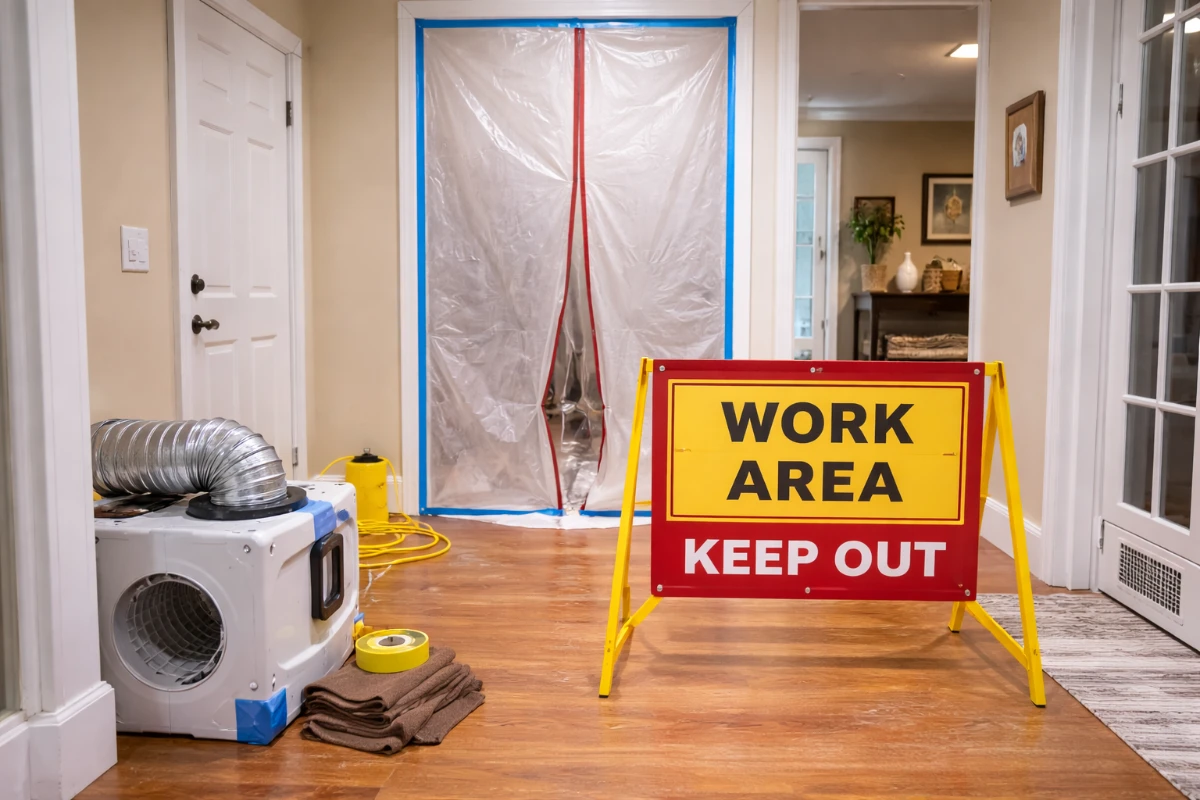
Before you touch a cloth, slow the spread:
-
Close doors to finished rooms
-
Keep windows cracked where it helps ventilation (if weather allows)
-
Don’t run fans that blow dust from one room to another
-
If your remodel area is isolated, keep it that way until cleanup is finished
If you can avoid running the HVAC during the messiest part of cleanup, do it. If you can’t, at least plan to change the filter right after.
Step 2: Start high and go slow (yes, ceilings first)
This is where people accidentally make the dust “come back.”
Drywall dust falls. So if you vacuum floors first and then wipe a ledge, you just ruined your own progress.
Do this order instead:
-
Ceilings (lightly) and high ledges
-
Walls (especially near sanding)
-
Window sills, trim, baseboards
-
Furniture surfaces
-
Floors last
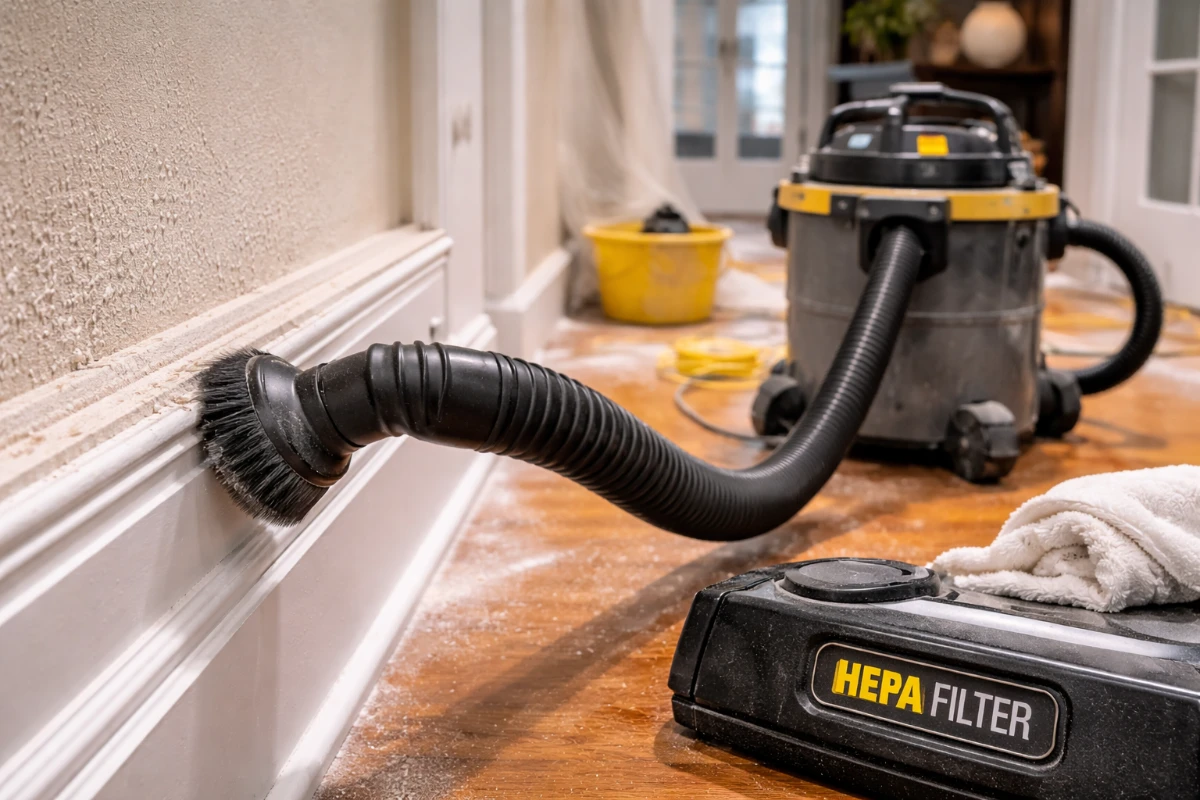
Step 3: HEPA vacuum everything you can (not a regular vacuum)
A standard vacuum can blow fine dust right back out. HEPA filtration is the difference between “collected” and “re-launched.”
EPA rules for renovation dust cleanup require HEPA vacuums in certain contexts (lead-related work), and the same idea applies here: HEPA captures the fine stuff that causes that next-day haze.
Use a brush attachment on:
-
baseboards and trim
-
vents and returns (the visible parts)
-
upholstery seams
-
the top edge of doors, frames, and picture ledges (these collect dust like crazy)
If you only do one upgrade: make it HEPA.
Step 4: Wet wipe (don’t “dry dust”)
After HEPA vacuuming, follow with damp wiping. Not soaking wet. Just enough to trap particles.
Dry dusting can look productive while it’s actually just redistributing powder into the air. Wet wiping grabs it and keeps it there—again, this lines up with EPA’s recommended approach for dust cleanup: HEPA vacuum plus wet wiping.
Microfiber helps because it holds fine particles better than a fluffy rag.
Step 5: Wet mop, with rinse water that you actually change
This is the part people rush. Don’t.
Mop once, dump the bucket, refill, mop again. Drywall dust turns your water into gray soup fast, and if you keep mopping with dirty water, you’re basically painting the dust back onto the floor.
EPA’s cleanup guidance also specifically calls out wet mopping with plenty of rinse water for dust removal.
Step 6: Deal with the HVAC, or you’ll keep losing the fight
Now do the “why is it back?” prevention step:
-
Change your HVAC filter right after cleanup
-
Vacuum around return grilles and vent covers (the outside)
-
Consider running a portable air cleaner for a day or two in the worst rooms
ASHRAE commonly recommends at least MERV 13 filtration where the system can handle it (many homes can, but not all), which can help capture fine particles during the settling period.
If your system struggles with airflow, don’t force a filter your unit can’t handle—use the highest rating your HVAC can support and add a portable air cleaner where needed.
Step 7: Do one “second pass” the next day
This is the secret sauce.
Even when you do everything right, some dust will settle overnight. So the next day, do a fast version:
-
quick HEPA vacuum of floors and baseboards
-
a light damp wipe of sills and flat surfaces
That second pass is usually what stops the “it came back” cycle for good. This is a big part of solid post-remodel drywall dust cleanup.
Mistakes that make drywall dust come back
Let’s call these out, because they’re common:
-
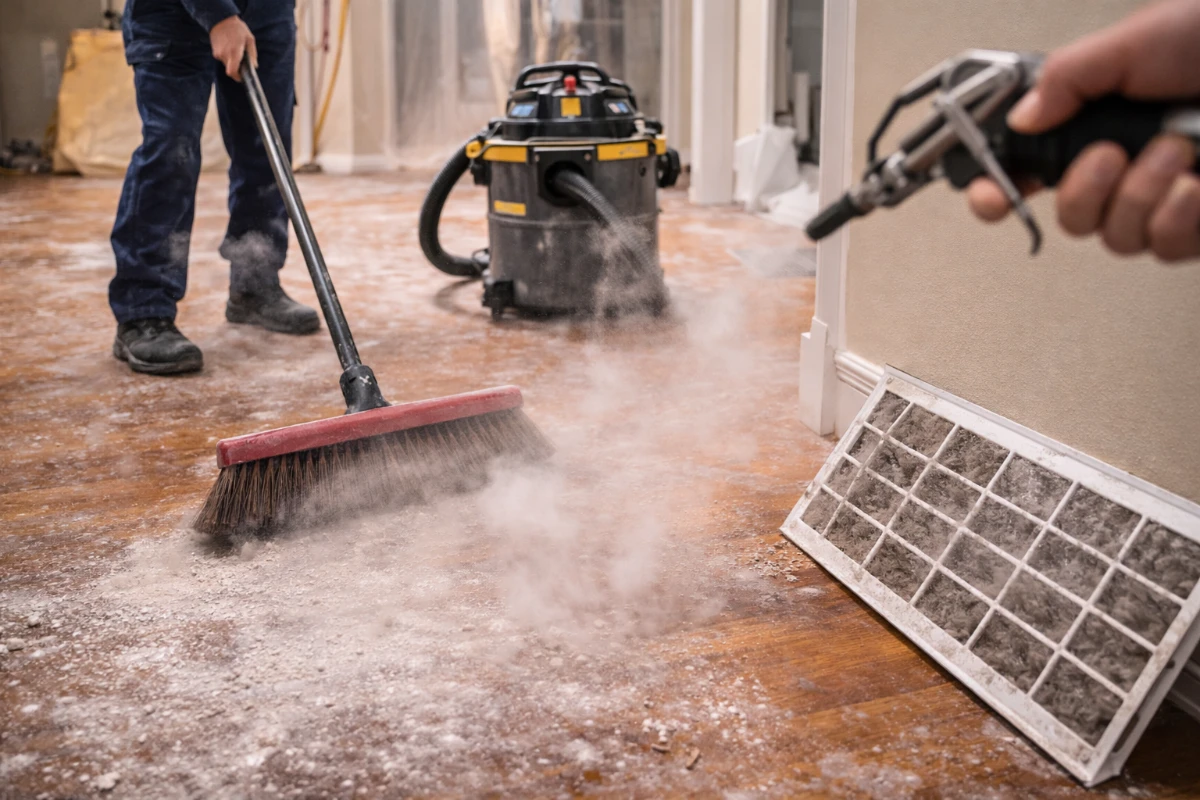
Dry sweeping (puts dust back into the air)
-
Using compressed air to “blow it off” (same problem)
-
Cleaning floors first (dust falls right back down)
-
Using a non-HEPA vacuum (fine dust gets re-circulated)
-
Forgetting the HVAC filter (dust keeps getting redistributed)
When it’s time to call in post-construction cleaning
If the dust is in every closet, your furniture feels gritty, or you’re seeing dust blow out of vents… that’s usually beyond a quick DIY clean.
This is exactly what post-construction cleaning is for: detailed top-to-bottom removal of fine dust, careful wiping of walls/trim, HEPA vacuuming, and floor rinsing done the right way—so the space is actually livable again.
Also worth noting: NIOSH has documented that drywall sanding dust can be a serious exposure issue for workers, which is one reason dust control and HEPA capture matter so much in the first place.