

Floors are more than decoration — the signs to watch for Floors are more than decoration — they show how well a space is cared for. Maybe your hardwood has lost its glow, grout keeps darkening no matter how often you mop, or vinyl feels tacky after cleaning. Those little problems are the floor’s way of raising a hand. In Baltimore’s humidity and heavy foot traffic, these signs show up faster than you’d expect. Most of the time, the fix isn’t a big job — it’s choosing the right floor cleaner for different floor types and changing a few simple habits.
One bottle for everything? Convenience that costs you
We all love a single product that “does it all.” But that convenience often comes with trade-offs: residue on some surfaces, stripped protection on others. The best cleaner for hardwood is usually pH-balanced and made to protect the finish; stone and tile cleaners are formulated to lift mineral deposits and grout stains without etching. Do a quick patch test in a hidden corner before you treat a whole room. Two minutes now can save hours and dollars later.
Over wetting and dilution mistakes: small habits, big consequences
Water helps lift dirt until it doesn’t. A dripping mop or undiluted concentrate can seep into seams, swell boards, and cause cupping or warping on hardwood and engineered floors. Concentrates used at full strength can dry into a sticky film that attracts dirt and dulls finishes, especially when someone uses one floor cleaner for different floor types without changing dilution.
Simple fixes to prevent over-wetting
- Follow the label for dilution every time; using the right mix keeps cleaners safe for floors and finishes.
- Wring your microfiber mop so it is damp, not dripping; this helps when you’re switching between tile, vinyl, and wood.
- Use a clean cloth to dry seams and edges after mopping, or open windows and fans to speed drying.
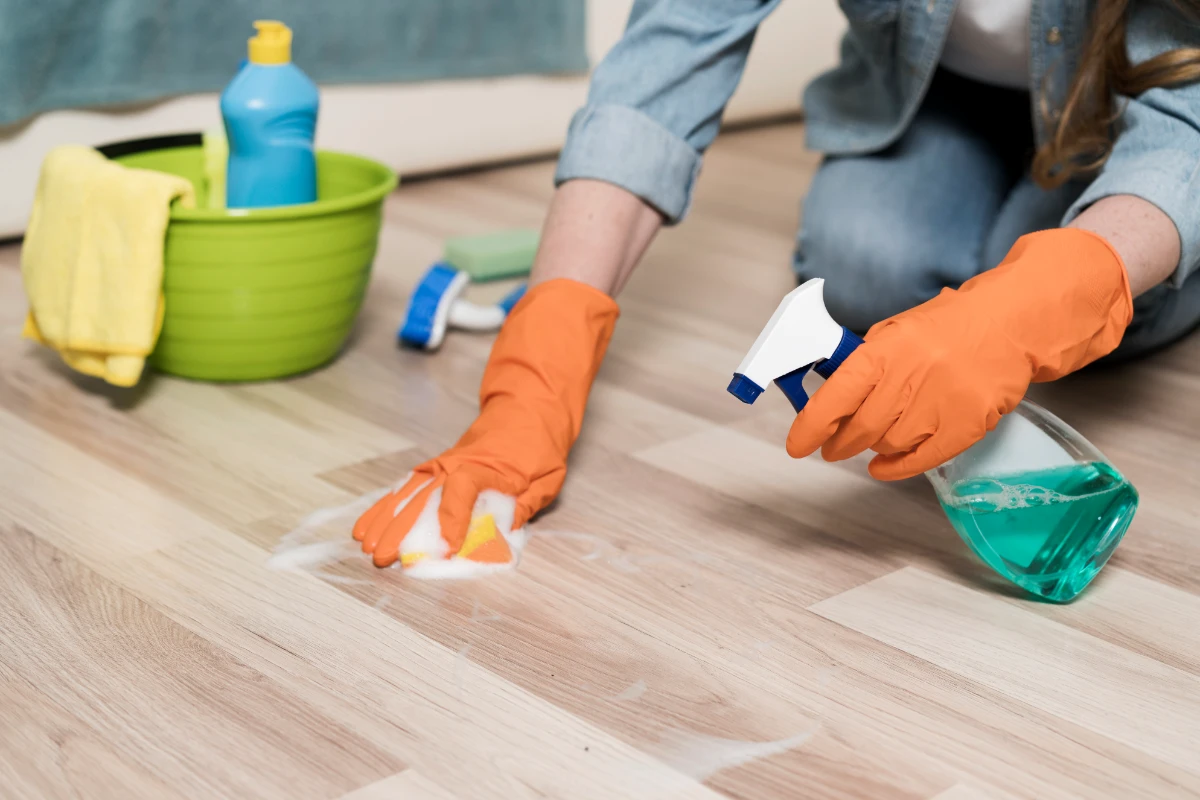
For businesses, trained commercial cleaners and a trusted commercial cleaning company know how to pick the best cleaner for hardwood or the right product for stone, and can help avoid costly mistakes.
Mixing Chemicals and DIY “Stronger” Solutions — Shortcuts That Backfire
When a floor doesn’t look clean, some homeowners in Baltimore try to make it look cleaner by mixing products or using DIY solutions. The problem is that many common cleaners react badly when combined, and the wrong ingredients easily damage some surfaces.
Important to Know — Never Do These When Cleaning Floors
- Never mix bleach with ammonia or vinegar
This creates toxic fumes and is unsafe indoors
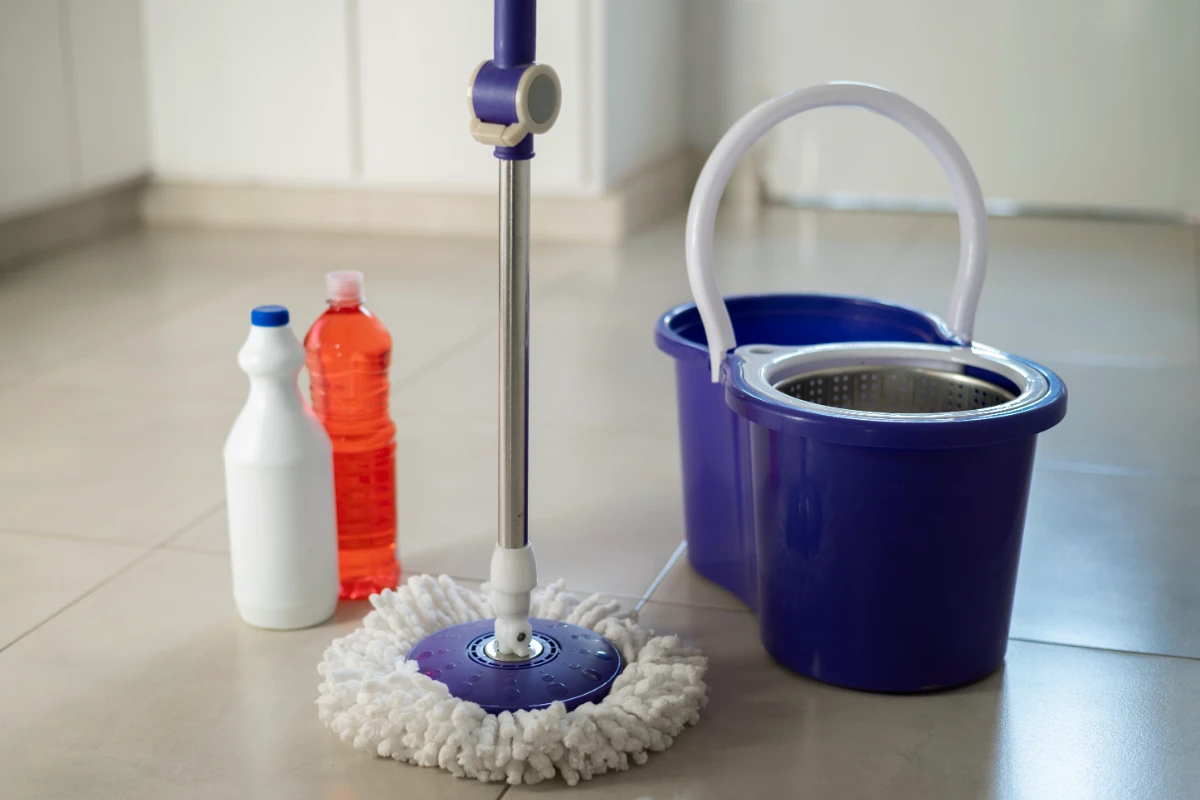
- Never use vinegar or acidic cleaners on stone, marble, or sealed floors
Acids slowly eat away at the surface
- Never combine two store-bought cleaners
Even similar products can react and leave residue
- Never use bleach-based cleaners on hardwood or vinyl
They strip finishes and weaken the surface over time
Using safe cleaners for floors means using one product, made for one surface, exactly as directed. If regular cleaning isn’t working, it’s usually a sign that the floor needs a different product or a professional approach through commercial cleaning services in Baltimore — not a stronger or mixed solution.
Why Different Floors React So Differently
Hardwood Doesn’t Handle Moisture Well
Wood absorbs moisture quickly. Too much liquid or the wrong cleaner can cause swelling, dull patches, or discoloration. Even products labeled “wood-safe” can be a problem if they leave moisture sitting on the surface.
Vinyl and Laminate Hold Onto Residue
Vinyl and laminate floors often suffer from buildup. The wrong cleaner leaves a thin film behind, which traps dust and makes floors look cloudy or feel sticky. This is especially common in busy Baltimore spaces with a lot of foot traffic.
Tile Is Durable — Grout Is Not
Tile may be tough, but grout is porous. Incorrect cleaning products can push dirt deeper into grout lines instead of lifting it out. Over time, floors start looking darker no matter how often they’re cleaned.
How Commercial Cleaning Companies Avoid These Issues
Commercial cleaning companies avoid these problems because they’ve worked with many different floors and know what can go wrong. They understand which floor cleaner for different floor types is safe to use and how much moisture or pressure each surface can handle.
They also use professional tools, including controlled power washing when it’s appropriate, to clean floors without damaging them. By paying attention to the floor material, water use, and product choice, commercial cleaning services in Baltimore help prevent long-term damage. In the long run, working with a commercial cleaning company can even save money by avoiding costly repairs, refinishing, or early floor replacement.
A Smarter Approach to Floor Cleaning in Baltimore
At Interworld Cleaning, we help businesses take better care of their floors through proper floor cleaning methods that protect each surface. Our team understands that every floor is different, which is why we use the right floor cleaner for different floor types and focus on safe cleaners for floors that won’t cause long-term damage.
As a trusted commercial cleaning company, we provide dependable commercial cleaning services in Baltimore, including floor cleaning, deep cleaning, and carpet cleaning. By paying attention to materials, moisture, and technique, our commercial cleaners help floors last longer and help businesses avoid unnecessary repair or replacement costs over time.