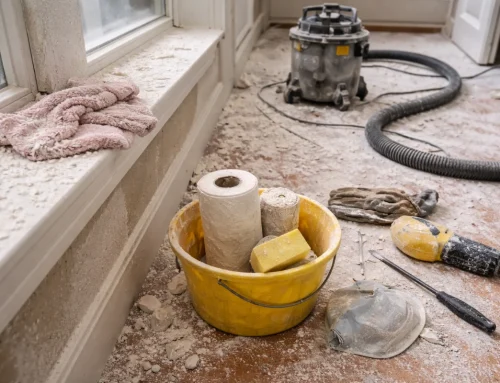


Anyone who has stepped into a newly built or renovated space knows the mix of excitement and frustration. The project is finally done, but the surfaces are still covered in paint flecks, gritty cement dust, and sticky adhesive marks that refuse to budge. These materials are tough because they’re designed to bond, harden, and stay put, which is exactly why cement dust cleaning and other forms of post-construction cleanup are so important.
In short, these residues are difficult to remove because they chemically attach to surfaces, settle deep into pores, and harden over time, making regular cleaning methods almost useless.
The Science Behind Stubborn Residues
Construction materials don’t behave like everyday dirt. Paint contains binders and resins that form a continuous film as it dries. Cement is made of very fine mineral particles that are alkaline and abrasive. Adhesives are formulated to create long-lasting bonds. When any of these land on a surface, they begin interacting with it immediately.
Paint Residue: More Than Just a Surface Smudge
Paint is formulated to form a durable film. When it dries on glass, trim, or tile, it creates a thin layer that resists moisture and abrasion. Pulling it off without the right solvent or technique can scratch or dull the surface beneath.
Cement Residue: The Hulk of Construction Mess
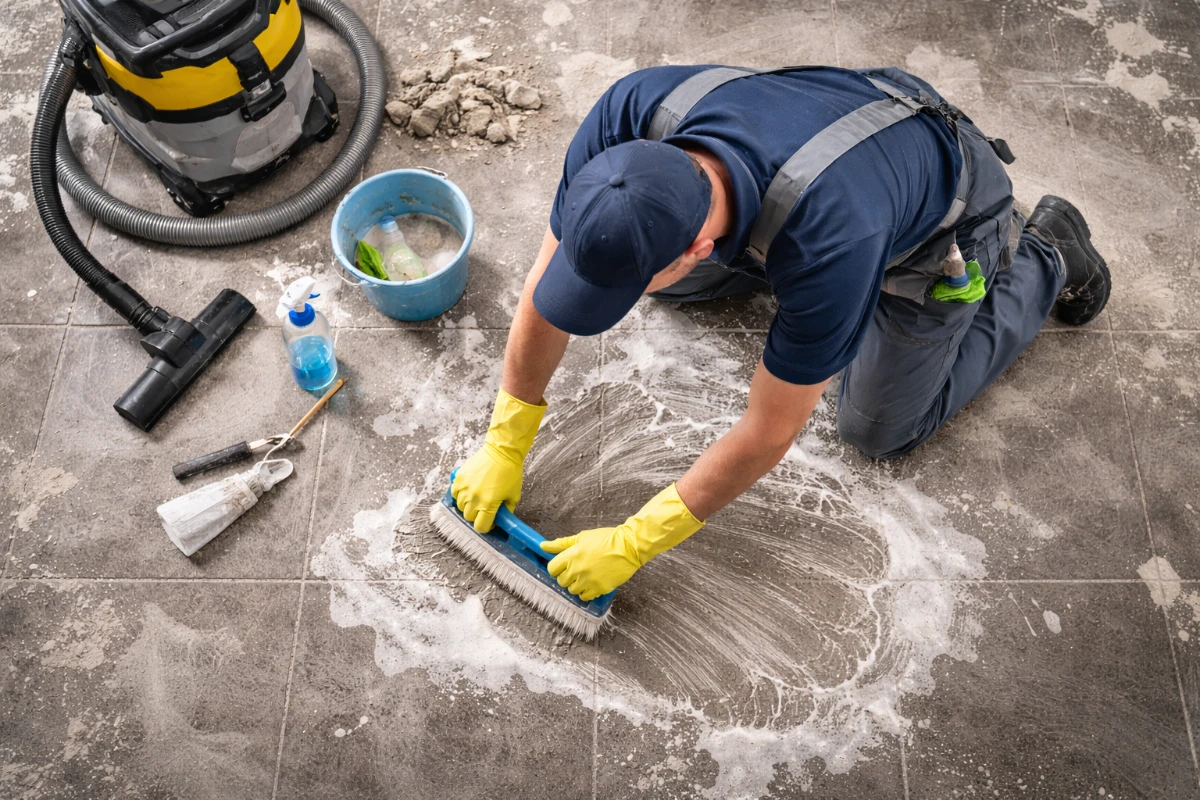
Cement dust is deceptively aggressive. The particles are so fine that they lodge in textures, grout lines, and seams. When moisture appears — even humidity in the air — those particles can hydrate and form a gritty paste that adheres to surfaces. Cement’s alkalinity can also react with certain finishes, causing dulling or discoloration if it’s left in place. That’s why targeted cement dust cleaning is about more than removing visible dust; it’s about neutralizing and lifting particles without damaging the material beneath.
Adhesive Residue: The Sticky Side of Construction Cleanup
Construction adhesives, caulks, epoxy glues, and flooring mastics are built for industrial strength bonding. They are not meant to come off ever. When excess adhesive squeezes out during installation, it creates a chemical bond to surfaces. It stays flexible, then sets firm. Many adhesives go through stages: 1. Wet and spreadable 2. Sticky and elastic 3. Fully bonded and hardened If not removed in stage one, stage three can feel nearly permanent.
Why household cleaning often backfires
A damp rag can turn cement dust into a stubborn paste. A metal scraper can leave scratches. A generic solvent can discolor a finish or leave a film that attracts more dirt. Everyday cleaning tools and products are designed for routine grime, not for materials that were engineered to last. That’s why many property owners choose a professional commercial cleaning company for the final pass after a build.
How Professional Teams Handle Post-Construction Residue
HEPA vacuuming first
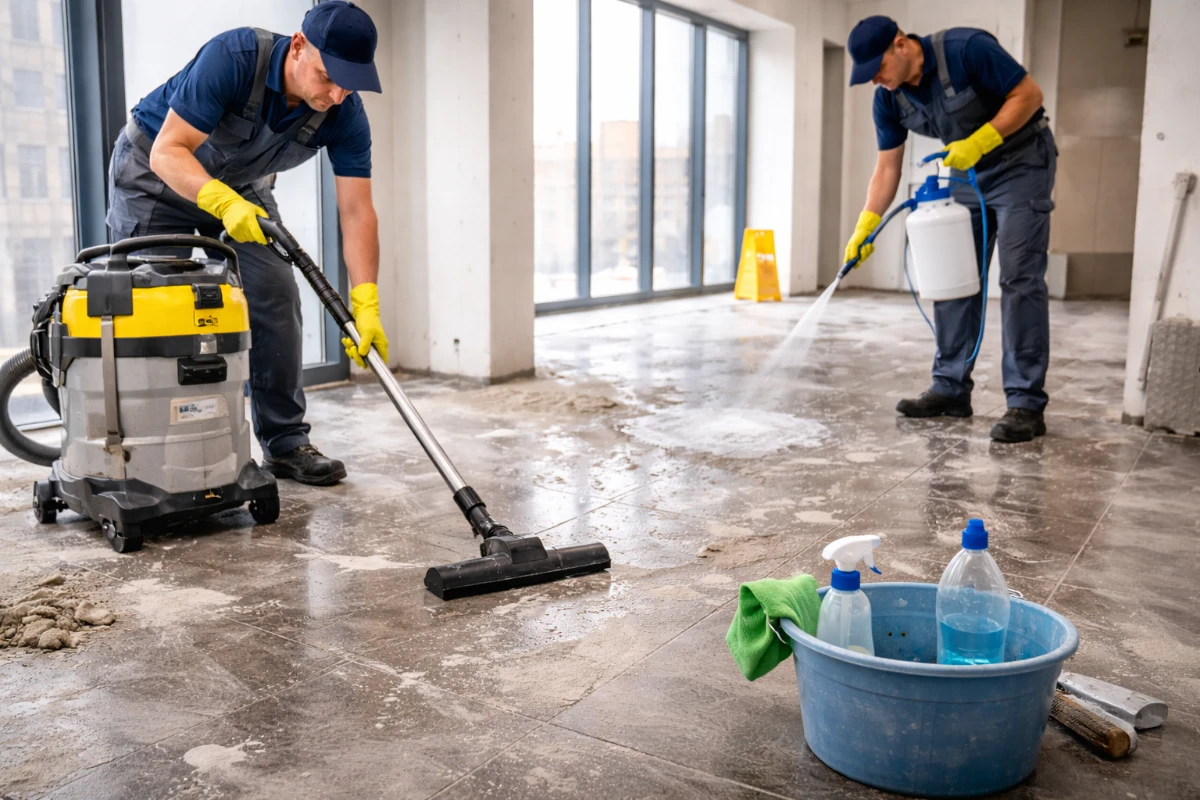
HEPA‑filtered vacuuming removes fine cement particles from the air and surfaces before any wet cleaning begins, preventing dust from settling deeper into floors, grout, and fixtures.
Balanced cleaning for cement residue
pH-appropriate solutions are used to neutralize cement buildup so stone, tile, and finished surfaces are cleaned without etching or discoloration.
Careful paint residue removal
Paint-safe products are applied gently to soften dried paint films, allowing them to lift cleanly without scratching glass, metal, or wood.
Targeted adhesive treatment
Adhesive residue is broken down and lifted rather than smeared into seams or porous materials, helping surfaces feel smooth and finished.
Detail-focused finishing
Microfiber cloths and soft pads are used to remove loosened particles while minimizing abrasion and preserving the integrity of new finishes.
Our team at Interworld Cleaning uses these surface-sensitive methods to deliver reliable cement dust cleaning and post construction cleaning for commercial properties throughout Baltimore. As a Google Guaranteed provider, we combine experience, careful workmanship, and proven techniques to provide dependable commercial cleaning services in Baltimore, helping newly built or renovated spaces feel truly finished and ready to use.
Ready for a Fresh Start?
If your renovation or build is complete, but the last layer of dust and residue is keeping the space from feeling finished, professional cement dust cleaning and full post construction cleaning can make the difference. Interworld Cleaning provides careful, surface-sensitive services across Baltimore. As a Google Guaranteed company, you can trust our commercial cleaners whenever you need moving cleaning, residential cleaning, or post-construction cleaning. Reach out to learn more or to schedule a cleanup, and we will help your space look and feel exactly as it was meant to.