People ask this question more than you’d think. Usually not because they love carpet. It’s because something went wrong. The carpet looks darker in certain spots. It smells a little off. Or it just doesn’t feel clean anymore, even after vacuuming twice.
That’s when the comparison starts: steam cleaning vs. dry carpet cleaning. And honestly, there isn’t a one-size-fits-all answer. Anyone who says there is probably hasn’t dealt with different buildings, different carpets, and different timelines.
Let’s talk through it the way it actually plays out in real homes and offices.
What’s the real difference between steam and dry carpet cleaning?
What is steam cleaning, really?
Steam cleaning (most pros call it hot water extraction) uses hot water and cleaning solution pushed deep into the carpet, then pulled back out with strong suction. It’s the “deep wash” option.
People like it because it can pull out built-up grime that vacuuming never touches. If your carpet has that dull look in high-traffic lanes, steam usually helps.
What is dry carpet cleaning?
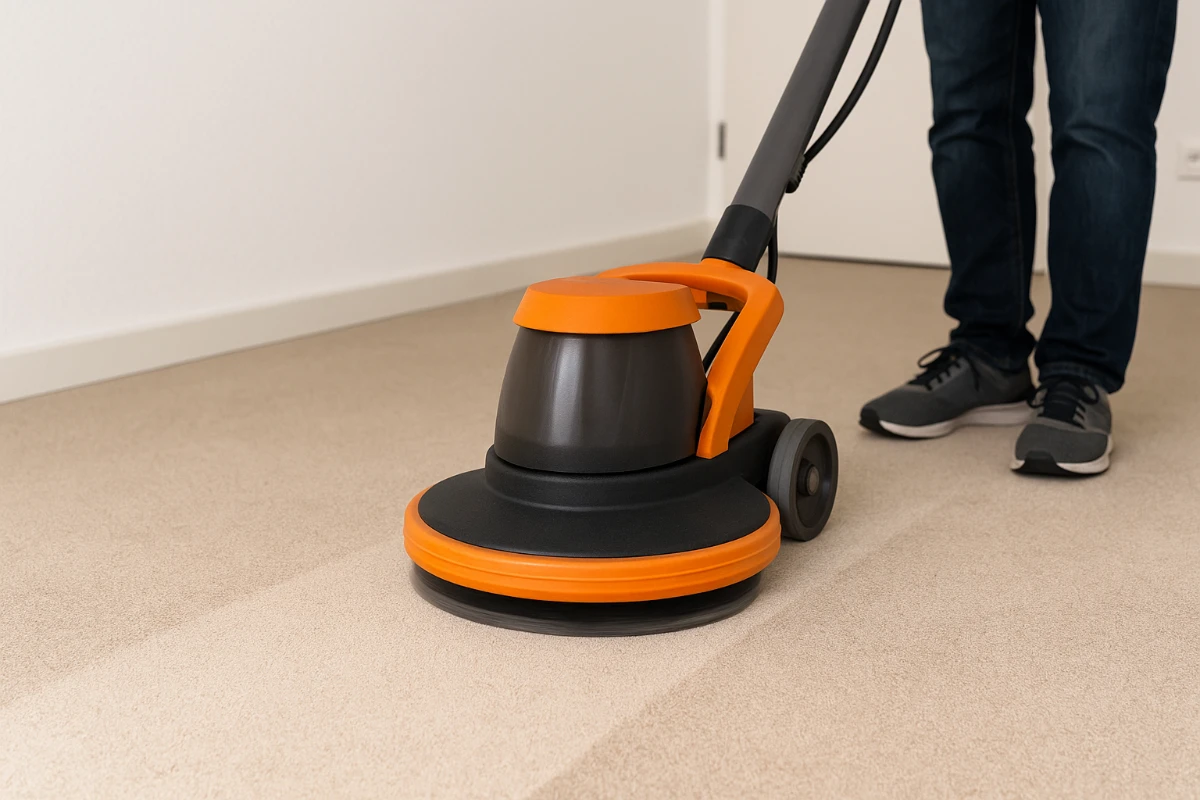
Dry carpet cleaning uses very low moisture. Depending on the method, it might be an absorbent compound that gets brushed in and vacuumed out, or a low-moisture encapsulation product that dries fast and traps soil so it can be removed.
Dry cleaning is popular when you can’t wait around for carpets to dry, especially in offices.
Which one is better for homes in Baltimore?
Baltimore homes have a few “carpet realities” that matter:
- Humidity in warmer months
- Mud and grit in spring and fall
- Older rowhomes where airflow isn’t always great
- Pets (lots of pets)
Choose steam cleaning if…
- You want the deepest clean you can get
- You have allergies and want to flush out dust and pollen
- You’re dealing with old spills, sticky residue, or heavy soil
- You can give it drying time (usually several hours, sometimes longer)
Steam is the “reset” choice. If the carpet feels packed down and tired, this is usually the better move.
Choose dry carpet cleaning if…
- You need fast turnaround (drying can be 30 minutes to a couple hours)
- Your carpet can’t handle a lot of moisture
- You’re doing routine maintenance, not stain rescue
- You’re worried about humidity slowing drying time
Dry methods can be a lifesaver when the weather is muggy and the building doesn’t have strong ventilation.
What about offices and commercial spaces?
If you manage an office, a medical space, a school, or retail, you already know the main issue: you can’t shut the place down for a day because the carpet is wet.
This is where dry methods often win. Many commercial cleaners use low-moisture systems so staff can walk on the carpet sooner and you’re not putting up “wet floor” signs everywhere.
That said, steam cleaning still has a place in commercial spaces. A lot of businesses in Baltimore do a mix:
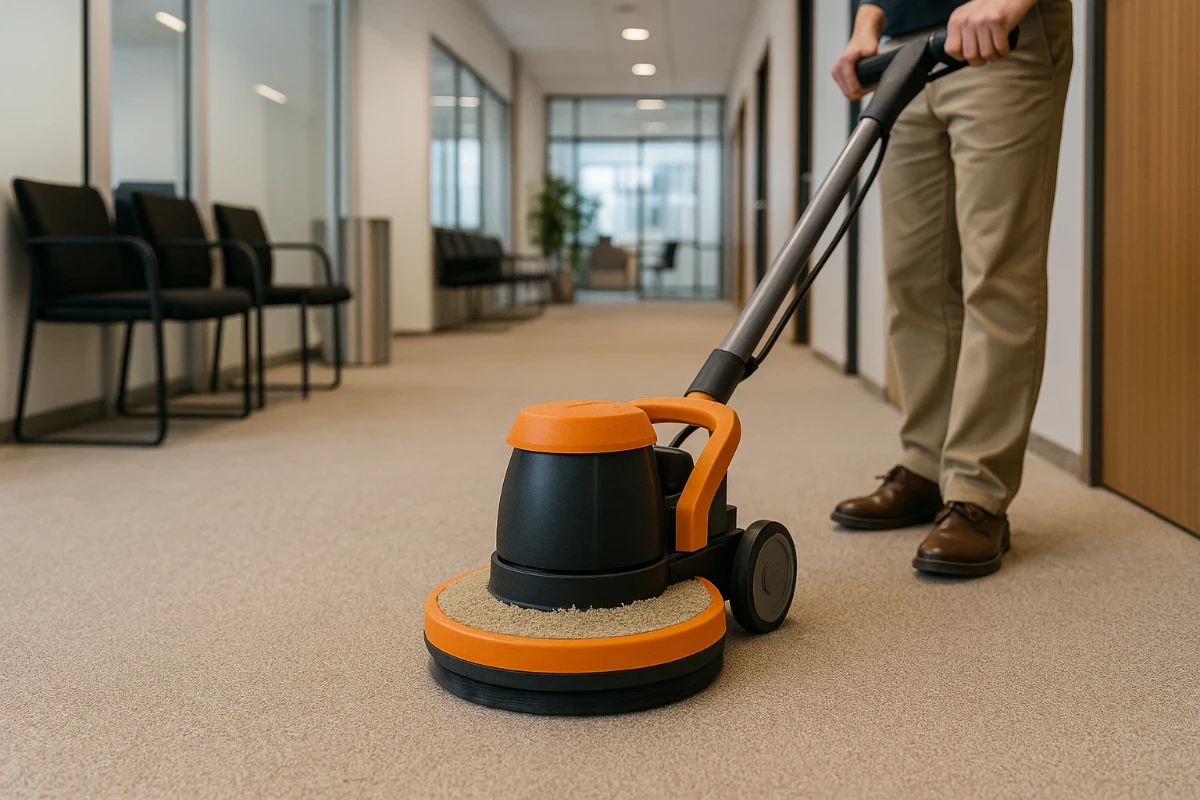
- Dry cleaning for monthly or quarterly maintenance
- Steam cleaning for periodic deep cleans (like 1–2 times a year)
If you’re comparing options for commercial cleaning services in Baltimore, this “combo plan” is usually the most realistic one.
Which method removes stains better?
This part is awkward because everyone wants a guarantee, and real life doesn’t work that way.
- Steam cleaning tends to do better on deep, older soil and sticky spills.
- Dry carpet cleaning can work great on surface soil and newer spots, especially when done regularly.
But here’s what matters more than the method:
What the stain actually is (oil? dye? pet urine?) and how long it’s been there.
A quick example: I’ve seen “mystery stains” near office break rooms that turned out to be years of coffee drips. Steam did better there. On the other hand, routine office traffic soil can respond really well to dry encapsulation because it’s consistent and fast.
How long does it take to dry?
This is usually the deal-breaker.
- Steam cleaning: often 6–12 hours to fully dry (sometimes longer if airflow is poor)
- Dry cleaning: often 30 minutes to 2 hours, depending on the method and conditions
In Baltimore, summer humidity can stretch steam drying time. If you’re in a space with limited ventilation, that matters.
Which one costs less?
Pricing depends on square footage, soil level, access, stain treatment, furniture moving, and the carpet type. But in general:
- Steam cleaning can cost more when it includes deep extraction and heavier labor
- Dry methods can be priced competitively, especially for larger commercial spaces
If you’re hiring a carpet cleaning service, don’t just compare the number. Ask what’s included:
- Spot treatment included or extra?
- Deodorizer included or extra?
- Furniture moving included or extra?
- Any minimum service fee?
That’s where people get surprised later.
For a home (routine cleaning)
- Dry cleaning if you want quick dry time and light-to-medium soil
- Steam if it’s been a long time or you want a deeper reset
For a home (pets, allergies, heavy soil)
- Steam is often the better first step
- Then maintain with dry cleaning if you want
For an office (busy, open daily)
- Dry cleaning usually makes the most sense
- Add occasional steam cleaning as a deeper refresh
For property managers
If you’re turning over units, timing matters. Dry cleaning helps when you need carpets ready fast. Steam helps when the carpet needs a real rescue before showings.
Need help choosing? Here’s what we do at Interworld Cleaning
If you’re still stuck between the two, that’s normal. Most people are. The easiest way is to look at your carpet, your traffic, and your timeline—then match the method.
At Interworld Cleaning Service, we’re a local commercial cleaning company that works with homes and businesses, and we offer both options through our carpet cleaning service—steam cleaning and dry carpet cleaning—so you don’t get forced into one method that doesn’t fit. If you’re looking for commercial cleaning services in Baltimore or you just want a straight answer on what your carpets need, check out Interworld Cleaning and reach out for a quote. We’ll help you pick the method that makes sense for your space (and your schedule).